A concrete slab foundation provides a durable and level base for Utah residential and commercial buildings, typically requiring a thickness of at least four inches for standard use or five inches for heavy equipment. For optimal performance in Utah's climate, property owners should consider frost-protected footing foundations or monolithic slabs to manage moisture and support structural loads effectively.
Building a new shop or home in Utah often starts with a high-stakes decision that many owners overlook until it is too late. A settling foundation or a cracked floor can ruin a significant investment before the framing is even finished. The long term success of your structure depends entirely on the integrity of the concrete slab underneath it, particularly given the expansive soils and freeze-thaw cycles common across Central Utah. Choosing the wrong foundation type or neglecting subgrade preparation leads to structural issues that far outweigh any initial savings. In this guide, we will examine the critical differences between monolithic slabs and stem wall footings, determine the ideal thickness for heavy equipment shops, and break down the real world costs per square foot for your project. You will gain the technical insight needed to ensure your building stands on a permanent, professional grade foundation.
Understanding the Role of a Concrete Slab Foundation in Utah Construction
A concrete slab foundation serves as the primary structural interface between a building and the soil. In Central Utah, this foundation style is the preferred choice for residential, commercial, and agricultural projects due to its versatility and strength. It provides a level, durable base designed to distribute the weight of the structure evenly while creating a barrier against subterranean pests and rising ground moisture.
At KRGoble Construction, our approach to local projects in Juab County begins with a thorough understanding of the terrain. The high desert environment presents specific challenges, most notably the intense freeze-thaw cycles that occur during Utah winters. When moisture in the soil freezes, it expands; when it thaws, the soil contracts. Without professional planning and proper execution of concrete work services, these cycles can cause a slab to heave or crack, compromising the entire structure.
Our site development expertise allows us to account for these regional climate factors during the initial phases of custom home construction or commercial builds. By focusing on a stable subgrade and appropriate thickness, we ensure the slab functions as a permanent, rigid platform that withstands the heavy loads of agricultural machinery and the fluctuating temperatures of the Intermountain West. You can view our portfolio to see how these foundations support diverse builds throughout the region.
Monolithic Slab vs Footing and Stem Wall: Which is Right for Your Project?
Choosing between a monolithic slab and a footing and stem wall foundation depends largely on the topography of your site and the specific building code requirements for your structure. A monolithic slab integrates the perimeter footing and the floor into a single, continuous pour. This method is highly efficient for flat building sites because it minimizes formwork and labor, making it a preferred, cost-effective choice for many detached shops and agricultural buildings in Central Utah.
For projects on sloped terrain or those requiring higher structural elevations, a spread footing and stem wall foundation is the standard. This process involves pouring a wide concrete footing below the ground level, followed by a vertical stem wall that reaches the desired grade. The floor slab is then poured inside this perimeter. While this involves more steps, it allows for greater flexibility in leveling a building on uneven ground.
The primary technical driver for foundation depth in Juab County is the frost depth. This refers to the specific depth at which the moisture in the soil is expected to freeze during a typical winter. If a foundation is not deep enough, the expansion and contraction of freezing soil can cause the structure to heave and crack, leading to significant structural damage over time. For custom home construction, local codes often mandate foundations that reach well below this line to ensure long-term stability.
While monolithic slabs are popular for shops due to their speed of installation, the complex loads and insulation requirements of a residential build often necessitate the traditional footing and stem wall approach. Our site development expertise allows us to analyze your specific parcel and recommend the foundation style that balances budget with the necessary frost protection. You can see examples of both foundation types in action when you view our portfolio, highlighting our commitment to durable concrete work services tailored to the unique landscape of Central Utah.
Ideal Concrete Slab Thickness for Shops and Steel Buildings
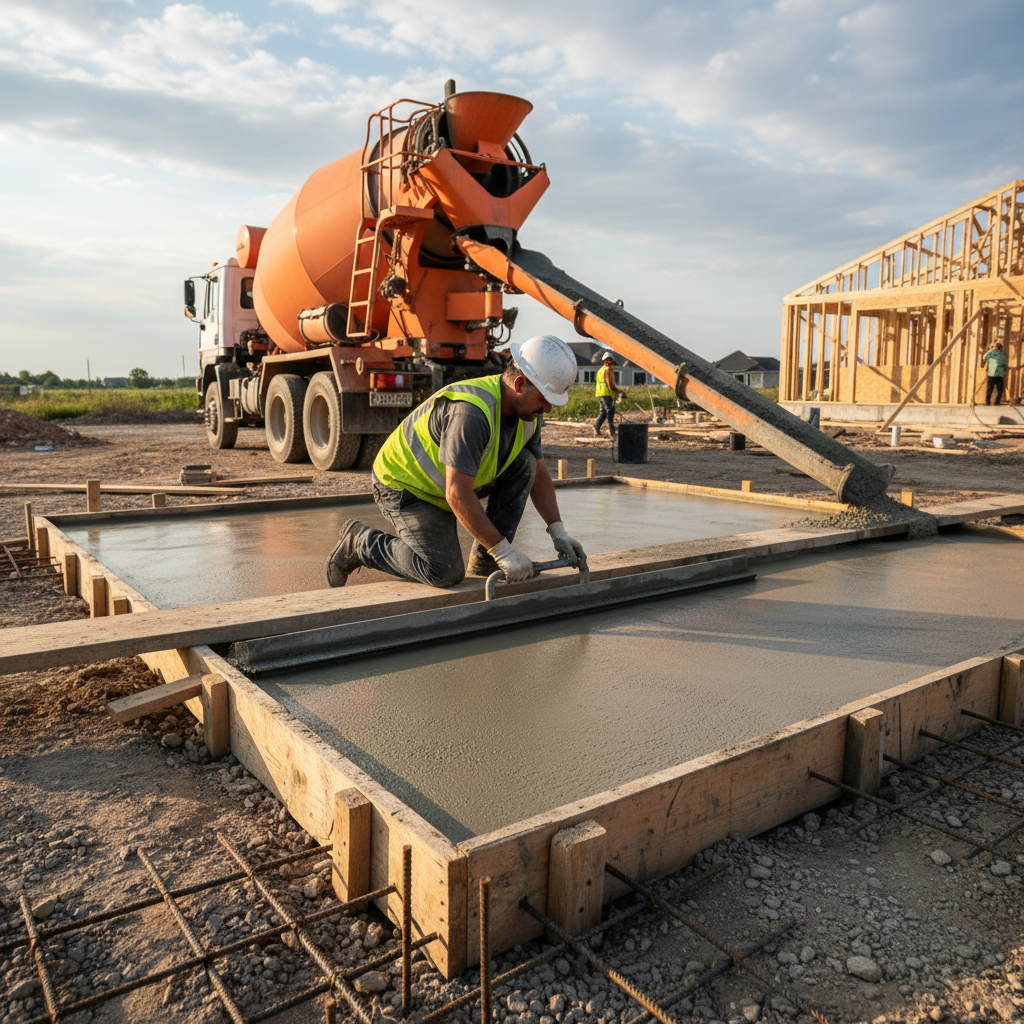
Determining the appropriate thickness for a concrete slab foundation depends entirely on the intended load of the structure. For residential garages or basic storage buildings in Juab County, a 4 inch slab is the industry standard. This thickness comfortably supports personal vehicles and light equipment without unnecessary material costs. However, agricultural or commercial shops require a more robust profile to handle heavy machinery, trailers, or the installation of two-post and four-post automotive lifts. In these scenarios, increasing the thickness to 6 inches is a critical investment to prevent structural failure under pressure.
While adding thickness provides mass, structural integrity often relies more on reinforcement than volume alone. For a typical 30x40 shop, jumping from a 4 inch to a 6 inch pour may increase costs by roughly $1,100, yet integrating rebar or wire mesh often proves more cost-effective for long-term durability than simply adding more concrete. At KRGoble Construction, we typically utilize a 4000 PSI concrete mix for these projects. This higher compressive strength, combined with strategic reinforcement placement, ensures the floor can withstand the concentrated point loads common in tank shops and heavy equipment bays.
Application Type | Recommended Thickness | Primary Reinforcement |
|---|---|---|
Residential Garage / Storage | 4 Inches | Mesh or #3 Rebar |
Automotive Shop with Lifts | 6 Inches | #4 Rebar on 12-16" centers |
Heavy Agricultural Equipment | 6+ Inches | Engineered Rebar Mat |
Investing in the correct specifications during the initial concrete work services prevents future slab displacement. You can view our portfolio to see examples of heavy-duty shop floors we have completed throughout Central Utah, each engineered to meet the specific operational demands of the owner.
Special Considerations for Steel Building Foundations
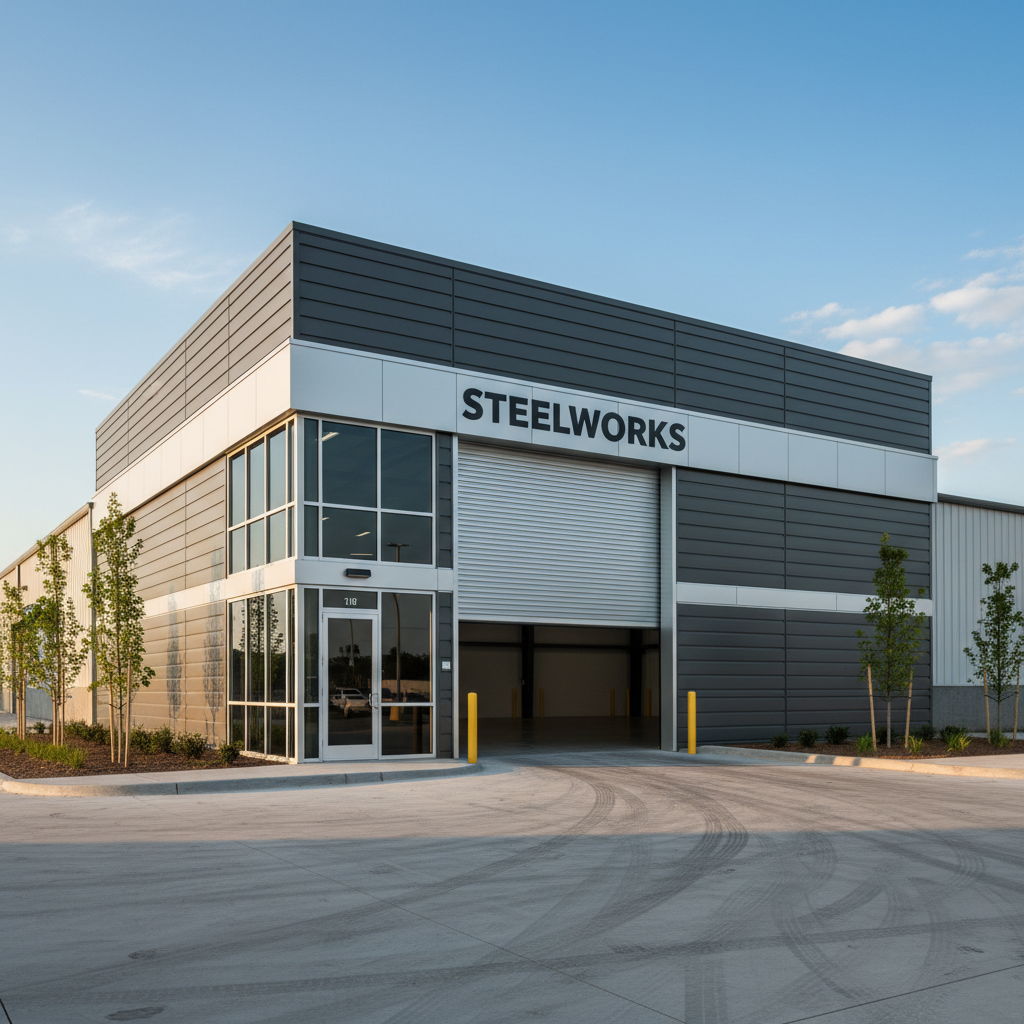
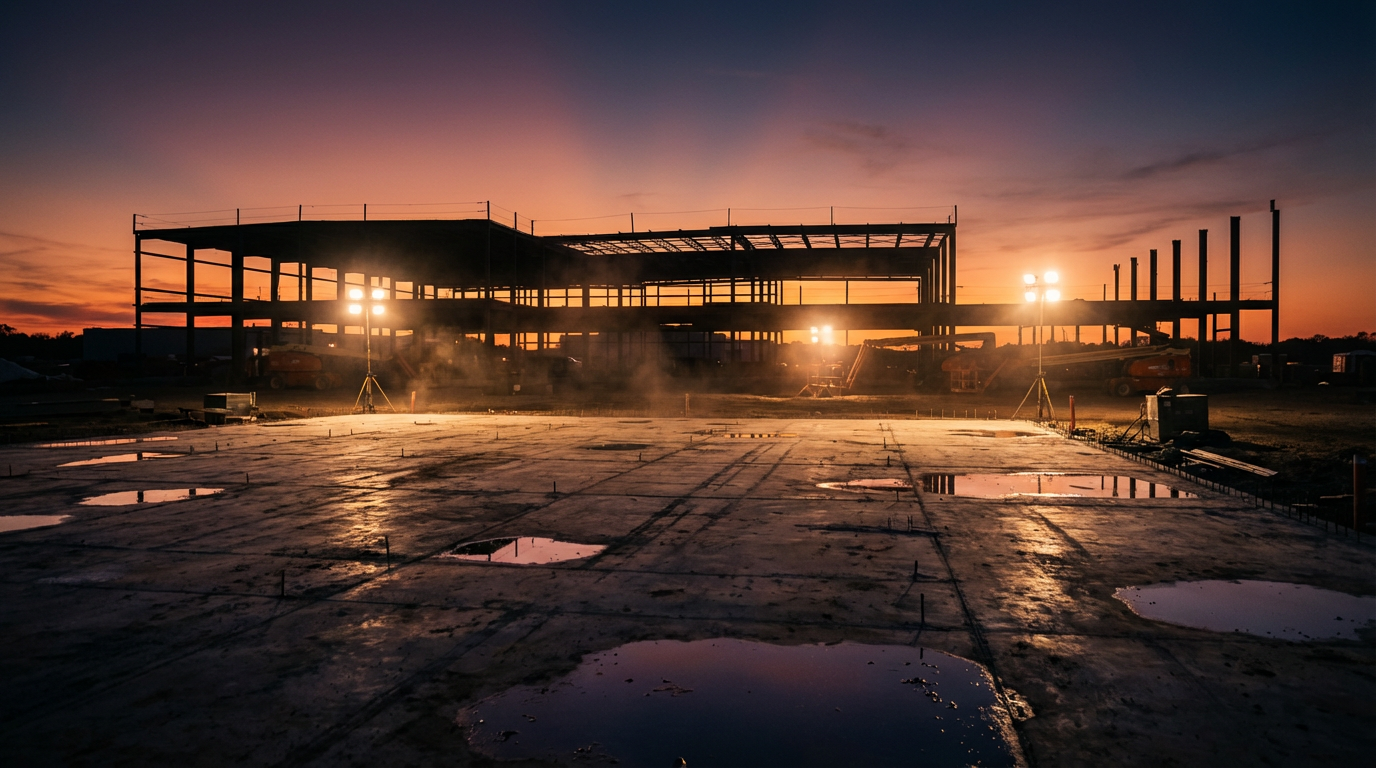
Steel buildings exert massive point loads at specific column locations, which differs significantly from the distributed weight found in traditional custom home construction. While a wood-framed house spreads its weight along a continuous sill plate, a steel structure concentrates thousands of pounds of pressure onto small footprints. This necessitates a concrete slab foundation with localized thickening, often called haunches or pier pads, to prevent the concrete from punching through under the stress of the frame and the heavy snow loads common in Central Utah.
Precision in anchor bolt placement is a critical phase of our concrete work services. These bolts must be cast into the wet concrete with exact tolerances to ensure the pre-engineered steel columns align perfectly. Furthermore, we often implement a U-Groove or perimeter notch. This recess allows the metal wall panels to overlap the slab, creating a weather-tight seal that prevents water from seeping under the walls during heavy rain or snowmelt.
Our site development expertise ensures that the subgrade can handle these concentrated loads along with the weight of heavy agricultural equipment. You can view our portfolio to see how these engineered foundations provide the necessary stability for large-scale steel shops and warehouses throughout Juab County. We focus on these technical details to ensure the building remains plumb and secure for decades, regardless of the equipment housed inside.
The Importance of Site Preparation and Subgrade Compaction
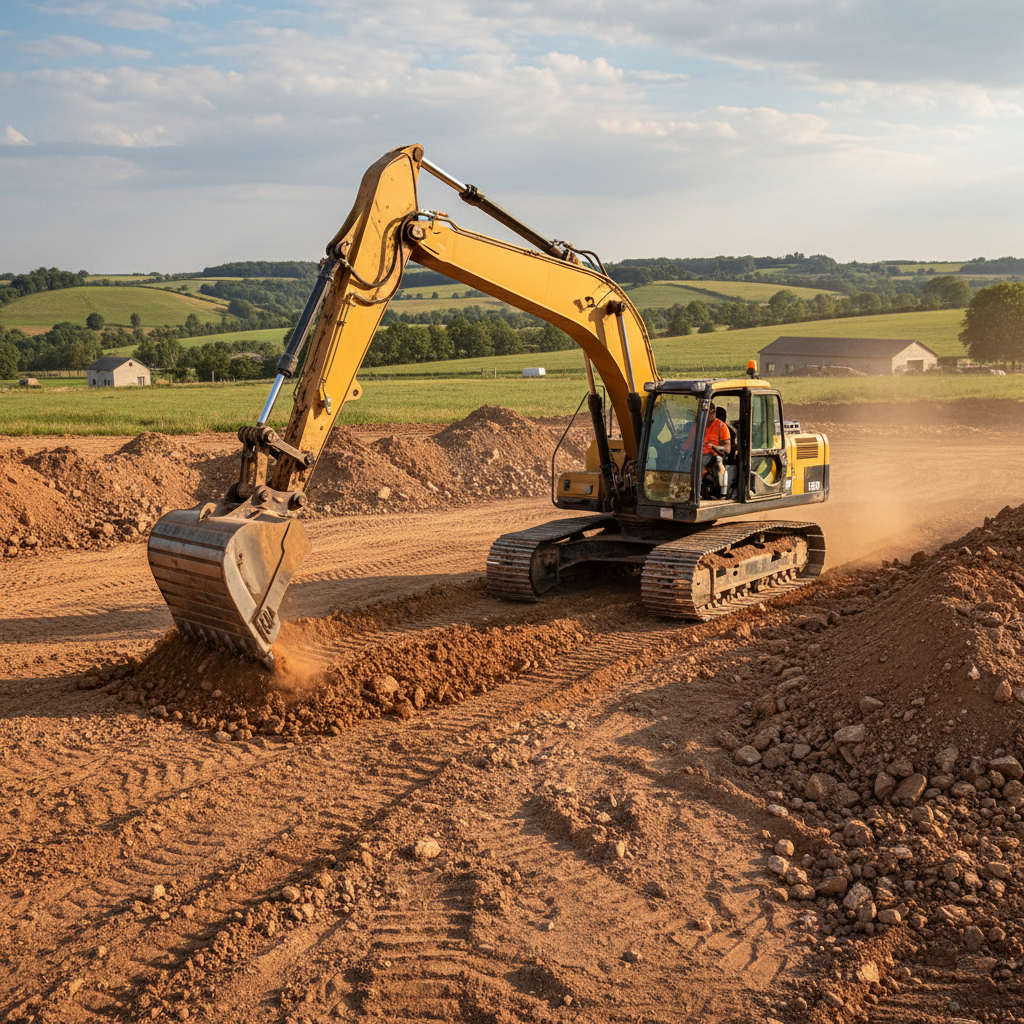
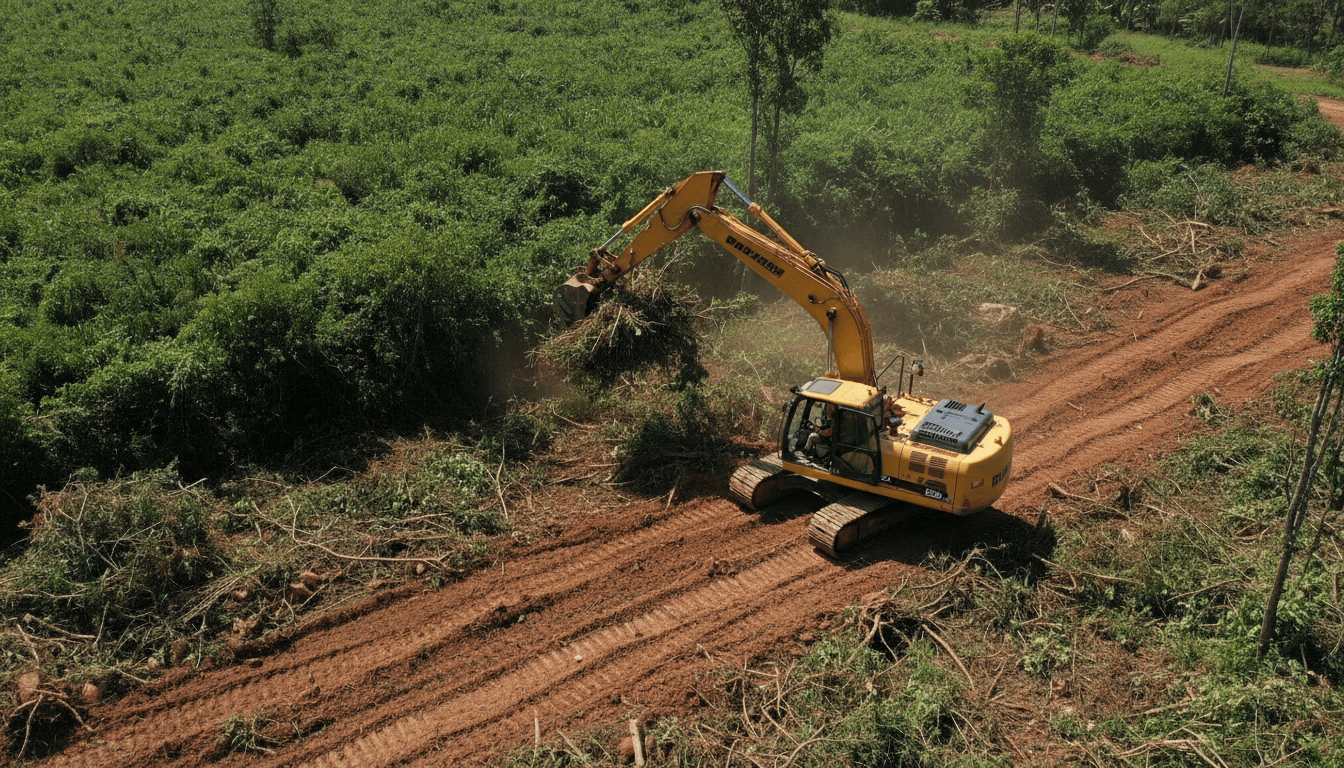
A concrete slab foundation is only as reliable as the ground supporting it. Without rigorous site preparation, even the highest PSI concrete will eventually succumb to shifting and cracking. The process begins with proper excavation, which requires removing all organic material and topsoil that can decompose and create voids over time. Once the site is cleared, we establish a level subgrade and install a base of compacted gravel or crushed stone. This layer serves two primary functions: it provides a stable, uniform platform for the pour and creates a capillary break to manage moisture drainage beneath the structure.
In the varying terrain of Central Utah, soil types range from dense, expansive clays to rocky alluvial deposits. Proper mechanical compaction is essential to ensure the soil reaches its maximum dry density before any concrete is placed. If this step is rushed or ignored, the weight of the building will cause the subgrade to settle unevenly, leading to structural failure. Our site development expertise allows us to identify these local soil conditions early in the project. By utilizing professional concrete work services that prioritize subgrade integrity, property owners in Juab County avoid the costly repairs associated with slab sinking or differential settlement. This preparation is the most critical phase for ensuring the longevity of any residential or agricultural build.
Concrete Slab Foundation Cost per Square Foot in Central Utah
Estimating the investment for a concrete slab foundation in Central Utah requires looking beyond a single flat rate. While property owners often search for a generic price per square foot, the total cost is a composite of material prices, labor, and the intensity of site preparation.
Local market rates for 4000 PSI concrete and steel rebar fluctuate based on supply chain factors and seasonal demand. Furthermore, the topography of your lot dictates the amount of excavation and backfill required. A 30x40 slab for a shop on a flat lot in Nephi will have a different cost profile than a foundation requiring deep stem walls on a sloped parcel in Eureka, even if the total square footage is identical.
Cost Factor | Primary Influence |
|---|---|
Materials | Concrete mix design and reinforcement schedule |
Site Prep | Excavation, gravel base, and mechanical compaction |
Foundation Type | Monolithic vs. Footing and Stem Wall depth |
Because local building codes in Juab County necessitate specific footing depths for frost protection, generic online calculators usually provide misleading estimates that ignore regional requirements. Accurate budgeting depends on site development expertise and current labor rates for professional concrete work services. To get a reliable figure for your custom home construction, we recommend obtaining a site specific quote rather than relying on national averages. You can view our portfolio to see the scope of residential and commercial foundations we have completed across the region.
Why Quality Concrete Work is the Cheapest Part of Your Building
Experienced builders in Central Utah often remark that the framing and finishes of a structure are actually the cheapest components because they are relatively easy to repair. The concrete slab foundation is the one element where you cannot afford to skimp; it is a permanent installation that dictates the longevity of every other investment. A failed foundation eventually manifests as cracked drywall, doors that will not latch, and compromised structural integrity. These issues often require remedial repairs that far exceed the initial cost of doing the job correctly the first time.
KRGoble Construction recognizes that a foundation failure can ruin an entire custom home construction or commercial facility. We apply our site development expertise to ensure the subgrade is perfectly prepared before the first yard of concrete is poured. Our commitment to quality craftsmanship and professional project management ensures that your building stands on a reliable base. By investing in professional concrete work services, you secure the structural future of your project. You can view our portfolio to see the durable foundations we have established for clients throughout Juab County.
Selecting the perfect concrete slab for your Utah home or shop ensures long term durability and structural integrity. Whether you prioritize cost or specialized reinforcement, understanding your soil and build requirements is essential for a successful project. If you find yourself overwhelmed by the technical choices or simply want expert help with your next build, we are ready to assist. You can learn more about our team and our commitment to quality craftsmanship. We take pride in building foundations that stand the test of time.